
How to Choose the Right Cat for Your Lifestyle (and Feel Confident About It)
Not sure how to choose the right cat for your lifestyle? Explore practical factors like personality, space, time, and care needs to find the best match.
1/17/20265 min read
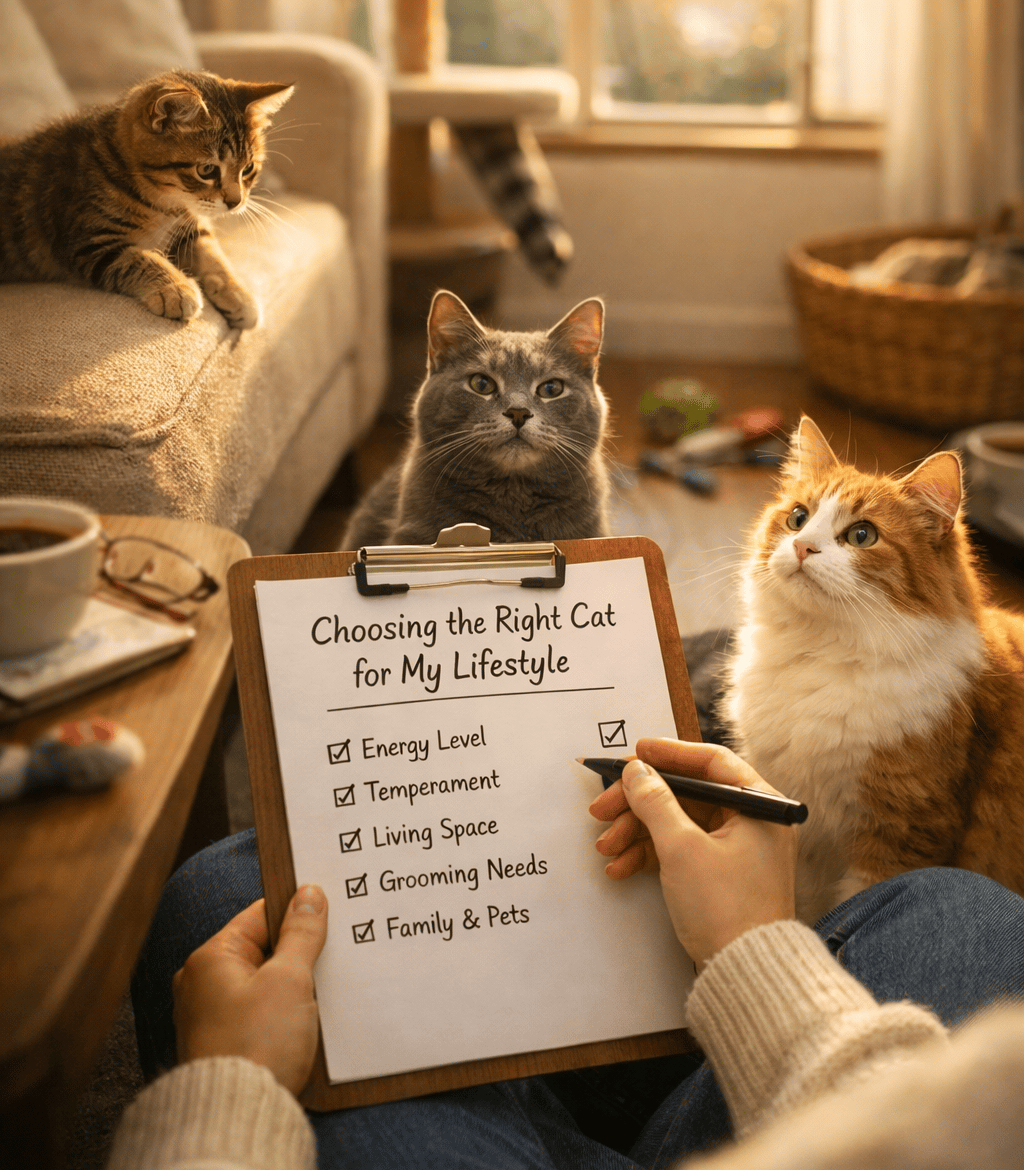
A Thoughtful Beginning
Most people start thinking about getting a cat with a simple image in mind: a quiet companion curled on a windowsill, a soft presence that makes a home feel warmer and more alive. Then reality begins to surface. A cat needs daily care, attention, medical support, and a stable environment for many years. Schedules shift. Living situations change. Energy levels rise and fall. What initially feels like a small decision quietly becomes a long-term relationship that shapes everyday life.
Many first-time adopters are surprised by how different individual cats can be. Some want constant interaction and play, while others prefer long stretches of solitude. Some thrive in lively households; others retreat from noise and unpredictability. These differences aren’t flaws — they are simply mismatches waiting to happen when expectations and reality diverge.
Choosing well is less about finding the “perfect” cat and more about understanding yourself: how much time you realistically have, how your home functions, how much structure you prefer, and what kind of companionship fits naturally into your rhythm. When those pieces align, both the human and the cat tend to settle into something that feels steady, comfortable, and sustainable.
---
Understanding Lifestyle Compatibility
Lifestyle compatibility is the quiet foundation of a healthy human–cat relationship. It refers to how well a cat’s physical and behavioral needs fit into the routines, space, and limits of a household. When there’s a mismatch, stress often shows up indirectly — scratching furniture, vocalizing excessively, avoiding interaction, or having litter box issues.
A few practical dimensions shape compatibility:
- Time availability: Feeding schedules, play, grooming, cleaning, and general interaction all take time, even for relatively independent cats.
- Environment: Apartment size, access to windows or outdoor views, noise levels, and opportunities for climbing or hiding matter more than square footage alone.
- Household composition: Children, roommates, visiting guests, and other animals influence how predictable and calm the environment feels.
- Financial capacity: Food quality, routine vet visits, unexpected medical costs, and supplies add up over time.
- Allergy sensitivity: Dander levels and grooming frequency may affect household comfort.
Many people discover that choosing based on temperament and fit leads to far fewer surprises than choosing based on appearance.
---
Activity Level and Energy Needs
Cats sit on a broad spectrum of energy and curiosity. Understanding where a particular cat falls helps prevent frustration on both sides.
High-Energy Cats
Some cats seem to treat every room like an obstacle course. They seek stimulation, chase movement, climb, and initiate play frequently. These cats often:
- Need daily interactive play to burn energy and stay mentally engaged.
- Benefit from climbing structures, puzzle feeders, and rotating toys.
- May become restless or destructive if under-stimulated.
Households with predictable routines and enough space for movement tend to manage these personalities more comfortably.
Moderate to Low-Energy Cats
Other cats prefer a slower pace. They may spend long periods watching the world from a window, napping, or calmly observing household activity. These cats typically:
- Enjoy shorter play sessions but still benefit from regular engagement.
- Adjust well to quieter homes and smaller spaces.
- Require less constant stimulation.
Energy levels are influenced by age, genetics, and individual personality rather than breed alone, which is why meeting a cat in person often reveals more than reading a description.
---
Temperament and Social Behavior
Temperament shapes how a cat relates to people, animals, and unfamiliar situations.
Social and Affectionate Cats
Some cats actively seek human contact. They follow people from room to room, tolerate handling well, and adapt more easily to moderate noise or visitors. Many buyers and adopters report that these cats integrate smoothly into active households where interaction is frequent.
Independent or Reserved Cats
Other cats prefer limited handling and predictable routines. They may enjoy proximity without constant touching and retreat when overstimulated. These cats often thrive in calmer environments with fewer disruptions.
Neither style is better or worse — the fit depends entirely on what kind of interaction feels natural in the household.
---
Age Considerations
Age affects energy, learning curve, medical needs, and long-term planning.
Kittens
Kittens bring high energy and rapid learning, but also require:
- Supervision and training.
- Socialization during early development.
- Patience for accidental messes and exploratory behavior.
- A long-term commitment spanning many years.
Adult Cats
Adult cats usually have established personalities and routines. Many are already litter-trained and socially stable, making it easier to assess compatibility.
Senior Cats
Older cats typically move less and may require:
- Special diets or medications.
- More frequent veterinary visits.
- Accommodations for mobility or comfort.
Selecting age often comes down to how much time, flexibility, and medical care a household can realistically support.
---
Living Space and Environmental Fit
Cats adapt well indoors, but thoughtful design still matters.
Apartments and Smaller Homes
Smaller spaces benefit from vertical territory — shelves, cat trees, and window perches create usable territory without expanding floor space. Predictable routines and controlled noise levels help calmer cats settle comfortably.
Larger Homes
Larger homes allow for multiple resting areas, better separation in multi-pet households, and more enrichment options. Still, space alone does not replace daily interaction and mental stimulation.
---
Grooming and Maintenance Requirements
Coat type influences daily maintenance and cleaning demands.
Short-Haired Cats
- Lower grooming needs.
- Less matting risk.
- Occasional brushing helps reduce shedding.
Long-Haired Cats
- Regular brushing prevents matting and hairballs.
- Higher time investment for coat care.
- More frequent cleaning in the home.
While no cat is truly hypoallergenic, many households manage sensitivities through grooming routines and environmental cleaning.
---
Health Risks and Long-Term Care
All cats require preventive care and routine veterinary visits. Some genetic lines carry higher risks for certain conditions, such as heart disease, kidney disease in older age, or dental issues. Responsible breeding practices and shelter transparency reduce uncertainty but cannot eliminate health risks entirely.
Financial planning typically includes routine care, emergency reserves, and sometimes insurance depending on regional availability and household preference.
---
Compatibility With Children and Other Pets
Household dynamics shape stress levels and safety.
Children
Cats vary in tolerance for noise and handling. Calm, confident cats often adapt better to supervised interaction. Teaching respectful handling reduces injury risks for both children and animals.
Other Cats and Dogs
Successful multi-pet households usually rely on:
- Gradual introductions.
- Individual temperament rather than assumptions based on species.
- Separate feeding areas, litter boxes, and resting spaces.
Some cats strongly prefer being the only pet, while others coexist comfortably.
---
Indoor vs. Outdoor Lifestyle
Outdoor access affects stimulation and risk exposure.
Indoor Cats
- Lower exposure to traffic, disease, and predators.
- Require intentional enrichment to prevent boredom.
Outdoor or Mixed Access Cats
- Greater physical stimulation.
- Higher exposure to injury, parasites, and environmental hazards.
Local regulations, wildlife protection concerns, and neighborhood safety often guide this choice.
---
A Practical Way to Think It Through
A simple framework helps clarify fit:
1. How much time is consistently available for care and interaction?
2. What physical space and environmental limits exist?
3. How active and noisy is the household?
4. Can routine and unexpected costs be comfortably absorbed?
5. Are major life changes anticipated in the near future?
6. Are allergies or mobility concerns present?
Answering these honestly reduces the risk of mismatches when trying to choose the right cat for your lifestyle.
---
Closing Reflection
A cat quietly integrates into daily life — shaping mornings, evenings, and the emotional texture of a home. The best matches rarely happen by accident. They emerge when expectations align with reality, when a household’s rhythms support a cat’s needs, and when patience replaces impulse. Thoughtful selection does not guarantee perfection, but it significantly increases the chances of a stable, healthy relationship that evolves naturally over time.